
Weighted walking has a marketing problem. The pitch is simple: add weight, burn more calories, get more out of a walk. That pitch is not wrong. Research and clinical guidance consistently point to higher calorie expenditure, higher heart rate, and greater muscular demand when load is added to walking[reference:15]. But the way the pitch is delivered often creates a false expectation: that the goal is to load up as quickly as possible. In practice, the opposite is true. The first month should feel almost too easy. If it does not, the load is probably too high.
The reason is adaptation. Walking is a repetitive, low-intensity movement. Adding weight changes the mechanics of every step, and the body needs time to reorganize posture, stride length, and core engagement around the new load. A vest that feels “challenging” on day one is often a vest that produces compensatory movement by day ten—a slight lean, a shortened stride, a locked lower back. Those compensations are not progress. They are the body finding a way to tolerate a load it was not ready for. Clinicians who work with weighted vests consistently recommend starting at roughly 5% of body weight and staying there long enough to confirm that gait and posture are unchanged before adding more[reference:16]. For a 150-pound walker, that is about 7.5 pounds. Lighter than most people expect.
This is where vest design matters in a practical, not cosmetic, way. A vest that sits close to the body and does not shift makes it easier to tell whether the load is actually being carried well. The weighted vest for walking category exists because walking places different demands on a vest than a gym session does. A loose iron-sand vest that pools at the bottom on a long walk changes the effective load distribution with every step. A low-profile vest that holds the weight flat against the torso keeps the stimulus consistent, which is exactly what you need when you are trying to judge whether your body is adapting or compensating.
The second principle is that “more weight” is not the only way to progress. Walking faster, walking farther, or adding hills are all legitimate progressions, and they often produce a better training effect than simply strapping on another five pounds[reference:17]. A weighted vest is a tool for increasing demand, not a scoreboard. If your pace is dropping, your stride is shortening, or your recovery is getting worse, the answer is usually to reduce load or reduce distance, not to push through. The Zelus weighted vests lineup includes adjustable models specifically because load should change over months, not days.
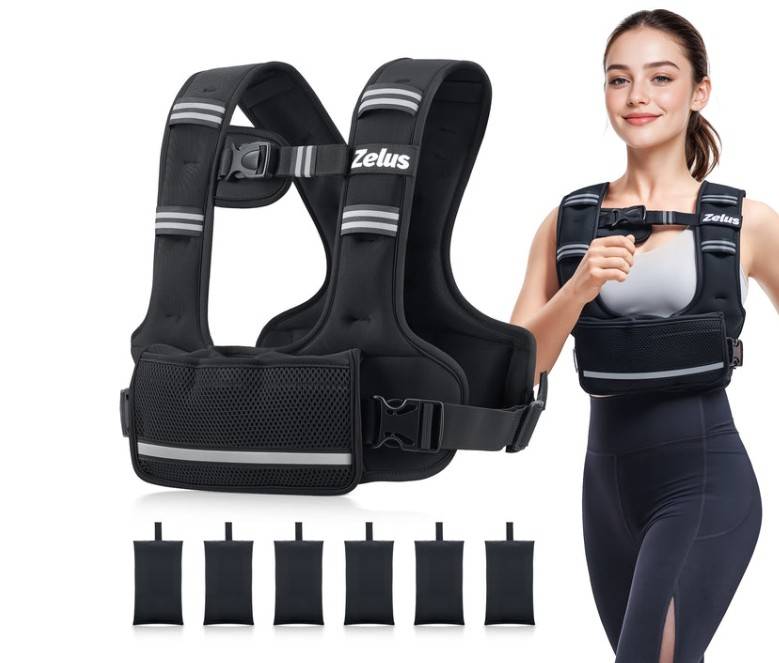
What does a good first month look like? Short walks—15 to 20 minutes—at a load you barely notice. Good posture, natural stride, no next-day soreness beyond mild muscular fatigue. If that sounds undramatic, that is the point. The dramatic results people associate with weighted walking—the calorie burn, the posture change, the endurance—come from consistency, and consistency comes from not dreading the vest. The Zelus’s fit finder is a useful starting point because it pairs a chest measurement with a conservative starting load, which is the right order of operations. Fit first, load second, progression last. That sequence is unglamorous, but it is the one that works.